Signability offers a dedicated NZSL translation and production service led by Daniel. As a native signer, Daniel brings linguistic precision to every project, managing everything from the initial prep work to the final edit. For projects requiring a specific on-screen presence, we select the right NZSL presenter to match the content, ensuring your message is always delivered with impact.
Bridge the gap between languages with high-quality NZSL production that speaks directly to the Deaf community.
FAQs
Why should our organisation translate documents into NZSL?
For many in the Deaf community, NZSL is their first or preferred language, while written English may be a second or third language. Translating your key documents ensures:
True Equity: Providing information in a person’s primary language ensures they are fully informed.
Compliance: It helps government agencies meet their obligations under the NZSL Act 2006 and the UN Convention on the Rights of Persons with Disabilities.
Enduring Impact: Unlike a one-off meeting, a translated video asset lives on your website or social media, serving the community 24/7 and leaving an enduring mark on your accessibility landscape.
What types of documents can be translated?
We can translate almost any written or recorded content into a professional NZSL video. Common projects include:
- Annual Reports and Strategic Plans
- Public Health and Safety announcements
- Educational resources and training modules
- Legal contracts and “Terms of Use” summaries
How does the Signability translation process work?
We treat every translation as a high-stakes production. Our process typically involves:
Scripting & Glossing: We adapt your English text into an NZSL-ready script, ensuring complex concepts are culturally translated, not just “signed word-for-word.”
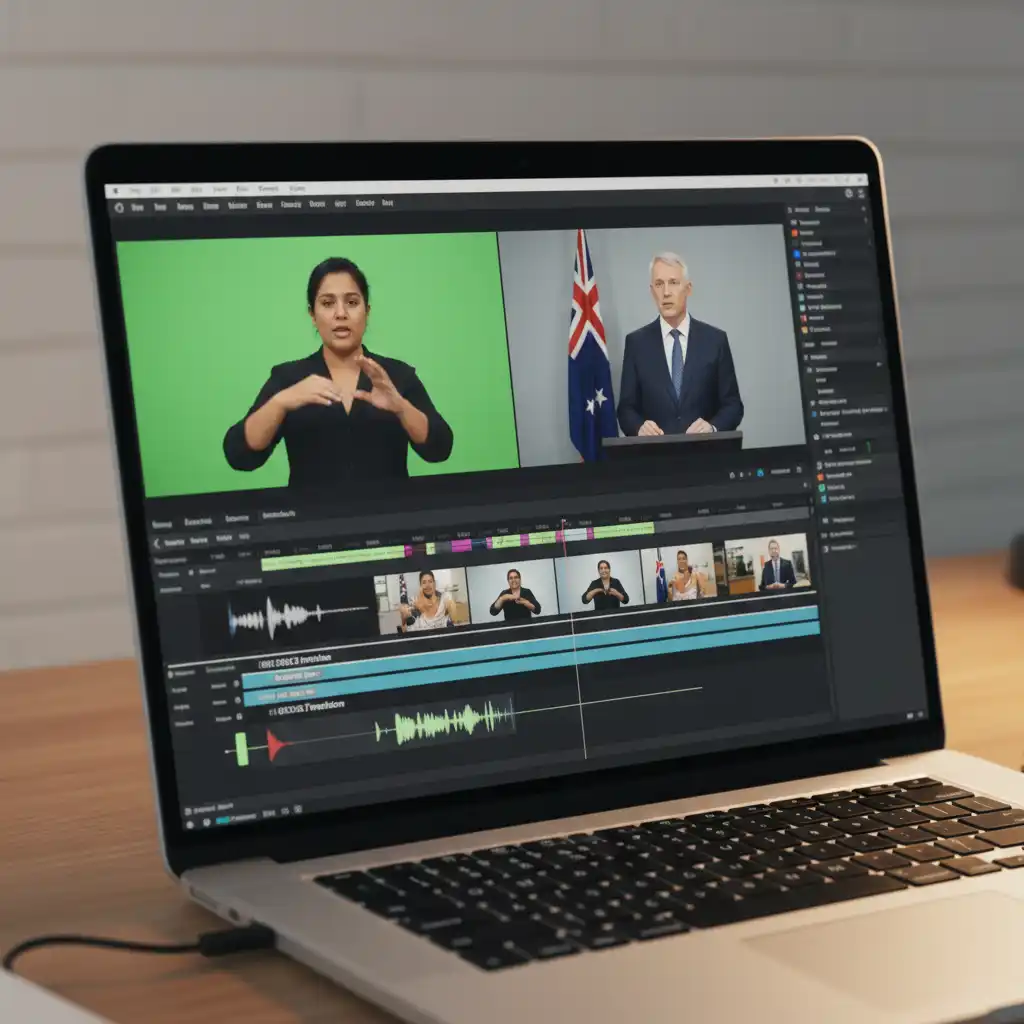
Professional Production: We use professional presenters and green-screen technology to ensure a high-contrast, distraction-free viewing experience.
Quality Assurance: Every translation undergoes a rigorous peer-review process by expert linguists to ensure absolute accuracy.
Final Delivery: You receive a polished digital asset ready for integration into your website, social media, or internal portals.
Does a translated video need captions or a voice-over?
While the NZSL video itself is the primary access tool for the Deaf community, we often recommend adding captions and a voice-over. This creates a “Universal Design” asset that is accessible to everyone—including those who are hard of hearing, people with learning disabilities, or hearing individuals who prefer to watch videos without sound.
Why can’t an interpreter just film themselves on a webcam?
At Signability, we believe in Deaf-led representation. While NZSL Interpreters are essential for live, two-way communication, the face of translated content should be a Deaf person.